

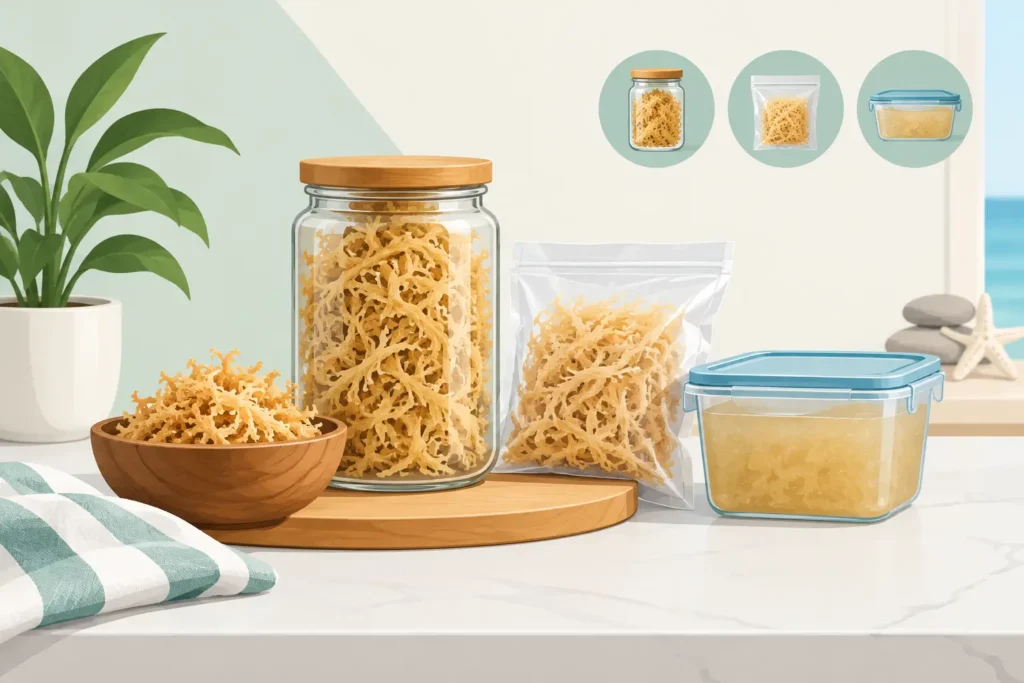
A beautiful jar of sea moss can become one of the most useful ingredients in your kitchen – ready for a morning smoothie, a warming soup, or a simple self-care ritual. But sea moss storage matters just as much as preparation. A little care helps preserve its natural quality, prevents unnecessary waste, and keeps your routine feeling easy.
Whether you have wildcrafted dried sea moss from St. Lucia or a batch of homemade gel in the refrigerator, the goal is the same: protect it from moisture, heat, and contamination. The best method depends on the form you are storing.
Sea Moss Storage Starts With the Form You Have
Dried sea moss and prepared sea moss gel have very different needs. Dried sea moss is shelf-stable when kept dry. Gel is perishable because it has been rinsed, soaked, and blended with water.
Before changing containers or putting anything away, check the product packaging. If it provides storage instructions or a best-by date, follow those directions first. Storage conditions can vary based on how a product was processed, packaged, and handled before it reached your home.
Think of dried sea moss as a pantry ingredient and prepared gel as a refrigerated food. Keeping that distinction clear makes everyday use much simpler.
How to Store Dried Sea Moss
Dried sea moss should be stored in a cool, dry, dark place. A kitchen cabinet away from the stove, dishwasher, or sunny window is usually a better choice than an open countertop. Heat and humidity are the main concerns, especially in warm climates or busy kitchens where steam is common.
Keep it in its sealed original package when possible. If you transfer it, choose a clean, fully dry airtight glass jar or food-safe container with a secure lid. Do not use a container that has any lingering moisture inside. Even a small amount of moisture can affect the texture and quality of dried sea moss over time.
Avoid storing dried sea moss in the refrigerator unless the package specifically says to do so. Refrigerators can introduce condensation when the container is repeatedly moved in and out. For most dried sea moss, a dry pantry is the more dependable option.
A few thoughtful habits go a long way:
- Close the package or container tightly after each use.
- Use clean, dry hands or utensils when removing a portion.
- Keep the container away from strong-smelling spices, coffee, and cleaning products.
- Label a transferred container with the purchase date and any package best-by information.
When stored properly, dried sea moss can stay useful for a long time. Still, appearance and aroma matter. If it develops an off smell, visible mold, unusual dampness, or signs of pests, it is best to discard it.
Why a dry pantry protects its natural character
Wildcrafted sea moss arrives with a story shaped by the sea, sun, and local harvesting traditions. At Ahai Life, that connection to St. Lucia and responsible sourcing is part of what makes the ingredient special. Once it is in your home, proper storage is a simple way to respect the care behind it.
A tightly sealed, dry container helps preserve the sea moss in the condition it was intended to reach you. It also makes preparation more pleasant when you are ready to soak a portion for gel, tea, broth, or a favorite recipe.
Storing Sea Moss After Rinsing and Soaking
Once dried sea moss has been rinsed and soaked, it needs refrigeration. This is the stage where it becomes more delicate, since water and handling create conditions that require more care.
After soaking, drain the sea moss well and place it in a clean covered container in the refrigerator if you are not blending it immediately. Plan to use soaked sea moss promptly rather than treating it like a long-term pantry staple. Keep it cold, covered, and away from raw meat or other foods that could cause cross-contamination.
Use fresh water for rinsing and soaking, and start with clean equipment. A clean sink, bowl, blender, jar, and spoon are not small details. They help your finished gel stay fresher and give you more confidence every time you reach for it.
If the soaked sea moss smells unpleasant or appears discolored in a way that was not present before soaking, do not blend or eat it. Natural sea moss can vary in color and shape, particularly when it comes from different marine environments, but spoilage signs should always be taken seriously.
How to Store Homemade Sea Moss Gel
Homemade sea moss gel belongs in the refrigerator in a sealed container. Glass jars with tight-fitting lids are a popular choice because they are easy to clean, do not hold odors easily, and let you see the gel before using it.
Let freshly blended gel cool before placing it in the refrigerator, but do not leave it at room temperature for an extended period. Once refrigerated, keep the lid closed and return the jar promptly after scooping out what you need.
For best quality, use a clean spoon each time. Avoid dipping a spoon that has touched your smoothie, oatmeal, or hands back into the jar. This small habit can make a meaningful difference in keeping the gel clean through the week.
Most homemade sea moss gel is best used within about two to three weeks when consistently refrigerated, though freshness can vary based on preparation, water quality, and handling. If your recipe or product guidance recommends a shorter timeframe, use that instead.
Trust your senses before each use. Discard gel that has mold, a sour or unpleasant odor, bubbling that seems unusual, or a significant change in texture or color. When in doubt, it is wiser to make a fresh batch.
Choose the right jar size
One large jar works for some households, but smaller jars can be more practical if you use sea moss gel slowly. Dividing a batch into two or three clean containers means you only open one at a time. The remaining portions stay less exposed to air and repeated utensil contact.
This is especially helpful for people building a gentle, consistent routine. A smaller jar in the refrigerator can feel like an easy invitation to add a spoonful to a smoothie or recipe without creating pressure to use an entire batch quickly.
Can You Freeze Sea Moss Gel?
Yes. Freezing is a helpful option when you make more gel than you can use within a couple of weeks. Ice cube trays are especially convenient because they create ready-to-use portions for smoothies, juices, soups, and sauces.
Once the cubes are frozen solid, transfer them to a freezer-safe airtight container or bag and label it with the date. This protects them from freezer odors and helps you keep track of what you have. For the best texture and flavor, try to use frozen portions within about three months.
You can add a frozen cube directly to a blended drink, or thaw it in the refrigerator when a recipe calls for softer gel. Avoid thawing and refreezing the same portion repeatedly. Instead, freeze in small portions so you only take what you need.
Freezing is not always necessary. If you enjoy sea moss daily and finish a jar within a week or two, refrigeration may be all you need. It depends on your household, your recipe habits, and how often you prepare a new batch.
Make Storage Part of Your Routine
The simplest system is often the one you will actually follow. Keep dried sea moss in one designated pantry spot. Store your gel toward the front of the refrigerator where it is visible but safely chilled. Write the preparation date on a small label, especially when life gets busy.
Sea moss is made for everyday wellness, not for complicated rules. With a dry space for the dried form, a clean jar for fresh gel, and a few frozen portions for later, you can enjoy this traditional marine botanical in a way that feels practical and nourishing. Let your storage habits support the ritual: fresh, simple, and ready when you are.