

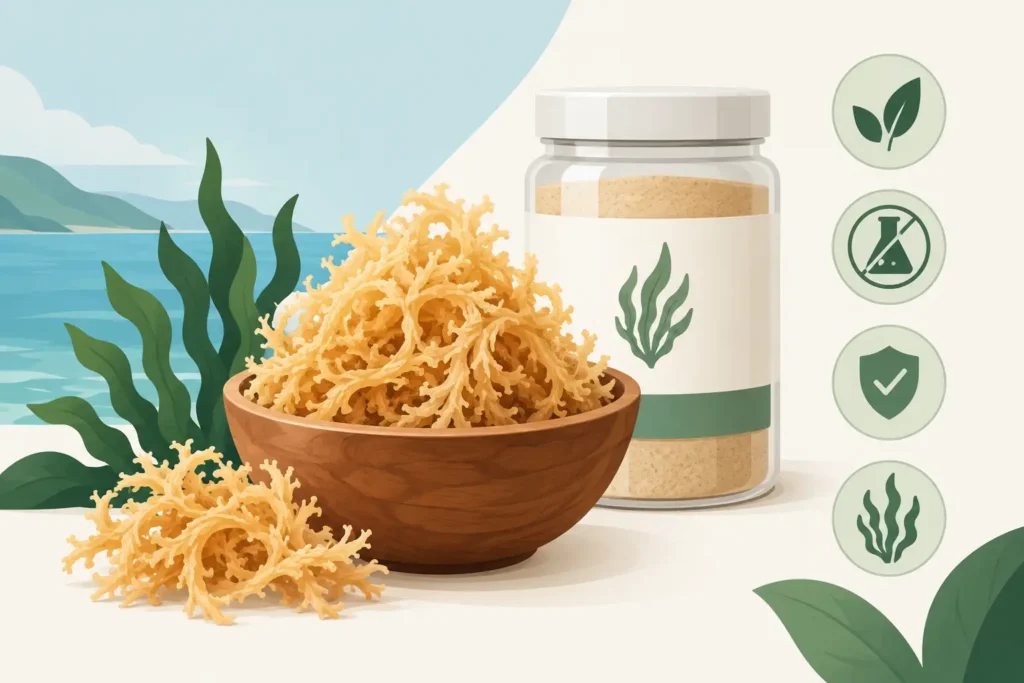
A sea moss jar can look beautifully simple on the shelf: a familiar name, an island-inspired color palette, and a promise of a more natural routine. But the details that matter most are usually found in smaller type. This sea moss ingredient label guide helps you read beyond the front of the package, so you can choose a product that feels aligned with your values, your kitchen, and your everyday wellness practices.
Sea moss has deep roots in Caribbean foodways and home traditions. As more products make their way into mainstream wellness, a clear label becomes one of the easiest ways to understand what you are bringing home. You do not need a complicated protocol or a background in marine botany. You simply need to know which details deserve a closer look.
Start With the Ingredient List
The ingredient list is the most direct place to begin. For a plain sea moss product, the list should be easy to recognize. A dried sea moss product may list sea moss as the sole ingredient. A prepared gel will usually include sea moss and water, since water is necessary to create its spoonable texture.
That does not mean every additional ingredient is automatically a concern. Some flavored gels include fruit, lime, spices, or other familiar foods. The question is whether those ingredients are clearly named and make sense for the product you are choosing. If you want sea moss for blending into smoothies, soups, or sauces without changing the flavor, an unflavored option with a short list may suit you best. If you prefer a ready-to-enjoy flavored gel, look for ingredients you would feel comfortable using in your own kitchen.
Be mindful of products with vague wording such as “proprietary blend,” particularly when the label does not explain what is in that blend. Transparency is more helpful than mystery. A label should help you understand the product, not make you guess.
Read the Sea Moss Name With Context
“Sea moss” is a widely used common name, not one single universal botanical identity. Depending on where it is harvested, the term can refer to different types of red algae. Labels may use a common name, a botanical or scientific name, or both.
This is not a reason to become suspicious of every difference you see. It is a reminder that origin and identification belong together. Sea moss traditionally gathered in the Caribbean may not carry the same scientific name as products associated with colder Atlantic waters, even though both may be sold under the sea moss name.
A thoughtful label or product description should give you enough context to understand what it is and where it comes from. Look for a stated harvest region, such as St. Lucia, along with a clear description of the sea moss itself. When a brand shares this information openly, it shows respect for both the ingredient and the traditions connected to it.
Do Not Rely on Color Alone
Gold, purple, and full-spectrum are useful format descriptions, but color alone does not tell the whole sourcing story. Natural sea moss can vary in appearance due to its type, growing environment, drying process, and the way it is prepared. Lighting and packaging can also make a major difference in how a product looks online.
Use color as one part of the picture, not as proof of quality. A product’s ingredient list, stated origin, harvesting approach, and brand transparency carry more meaning than a bold color claim on the front label.
Look for a Clear Place of Origin
For many people, sourcing is the heart of a sea moss purchase. The ocean region, the people who harvest the sea moss, and the care taken after harvest all shape the story behind the jar.
A strong label may state the country or island of origin directly. It may also explain whether sea moss is wildcrafted, farmed, or sourced through local harvesting partners. These words are not interchangeable, so it helps to read them carefully. Wildcrafted generally refers to sea moss gathered from its natural environment, while farmed sea moss is cultivated in a managed setting. Neither term should be treated as a shortcut to a personal value judgment. What matters is whether the brand is clear about its practices and approaches harvesting responsibly.
For shoppers drawn to island wellness traditions, a specific origin matters. “Caribbean-sourced” offers a broad starting point, but “harvested in St. Lucia” provides a more meaningful level of detail. Ahai Life centers its sea moss around trusted local sourcing partners in St. Lucia, honoring the place and people connected to the ingredient from the beginning.
Understand What “Wildcrafted” Can and Cannot Tell You
Wildcrafted is a meaningful sourcing term, but it is not a complete quality report on its own. It tells you something about where an ingredient is gathered, not necessarily how it was cleaned, dried, stored, tested, or transported.
Look for brands that pair wildcrafted sourcing with a few practical details. Responsible harvesting language, relationships with local partners, and an explanation of quality standards are all encouraging signs. When a company can describe its process in plain language, it is often a better indicator of care than a label crowded with dramatic claims.
Be cautious with language that makes sea moss sound rare, miraculous, or too good to question. A natural ingredient does not need exaggerated promises to earn a place in your routine. Honest sourcing is compelling enough.
Check the Format Before Comparing Products
Sea moss is sold in several forms, and each label answers slightly different questions. Comparing a dry package with a prepared gel without accounting for format can be confusing.
Dried sea moss typically gives you the most hands-on preparation. You rinse, soak, blend, and create a gel at home. The ingredient label may be especially short, while instructions and storage guidance become more important. Sea moss gel offers convenience for busy mornings and everyday recipes, but you will want to check its water content, any added ingredients, refrigeration needs, and use-by date.
Powders and capsules may be convenient for travel or simplified routines, yet they deserve the same close read. Check whether the product contains only sea moss or includes fillers, flavoring agents, or other botanicals. There is no universally best format. The right choice depends on whether you enjoy making your own preparations, how often you plan to use it, and what fits naturally into your household rhythm.
Find Quality Information, Not Just Marketing Words
Terms like “pure,” “clean,” and “premium” can sound reassuring, but they do not all have the same practical meaning. Look for details that show how a brand supports its standards. This may include quality testing, batch information, storage instructions, lot numbers, or accessible answers about sourcing and processing.
Testing language can be helpful when it is specific and responsibly presented. A brand does not need to overwhelm you with technical reports on its packaging, but it should be able to explain its approach to purity and quality. Since sea moss comes from the marine environment, thoughtful handling and careful standards matter.
Also check the basics: an intact seal, a readable expiration or best-by date, appropriate storage instructions, and a business name or contact method. These are simple signals, but they show that the product has been prepared for real-world use, not just a beautiful product photo.
Watch for Claims That Feel Too Broad
Sea moss belongs in the wellness conversation as a versatile food and marine botanical, not as a replacement for individualized medical care. Be wary of labels that promise to treat, prevent, or cure conditions, or that guarantee a particular result for every person.
Your needs, food preferences, and sensitivities are personal. If you are pregnant, nursing, managing a health condition, taking medication, or have questions about iodine intake, speak with a qualified healthcare professional before making a new ingredient a regular part of your routine. A responsible brand makes room for that kind of care rather than pushing one-size-fits-all promises.
Let the Label Support Your Routine
The best sea moss label does more than meet a requirement. It gives you enough information to use the product with confidence. For a plain gel, that may mean knowing it is made with sea moss and water, how to refrigerate it, and when to enjoy it. For dried sea moss, it may mean understanding its origin and having clear preparation guidance before you begin.
Once you find a product you trust, keep the ritual simple. Blend a spoonful of prepared gel into a smoothie, stir it into a soup or sauce, or explore recipes that fit your own tastes. The most sustainable wellness habits are often the ones that feel easy to repeat, rooted in ingredients you understand and choices you can feel good about.
A thoughtful label is a small thing, but it can carry a larger story: where an ingredient began, who handled it with care, and how it can find a practical place in your home.