

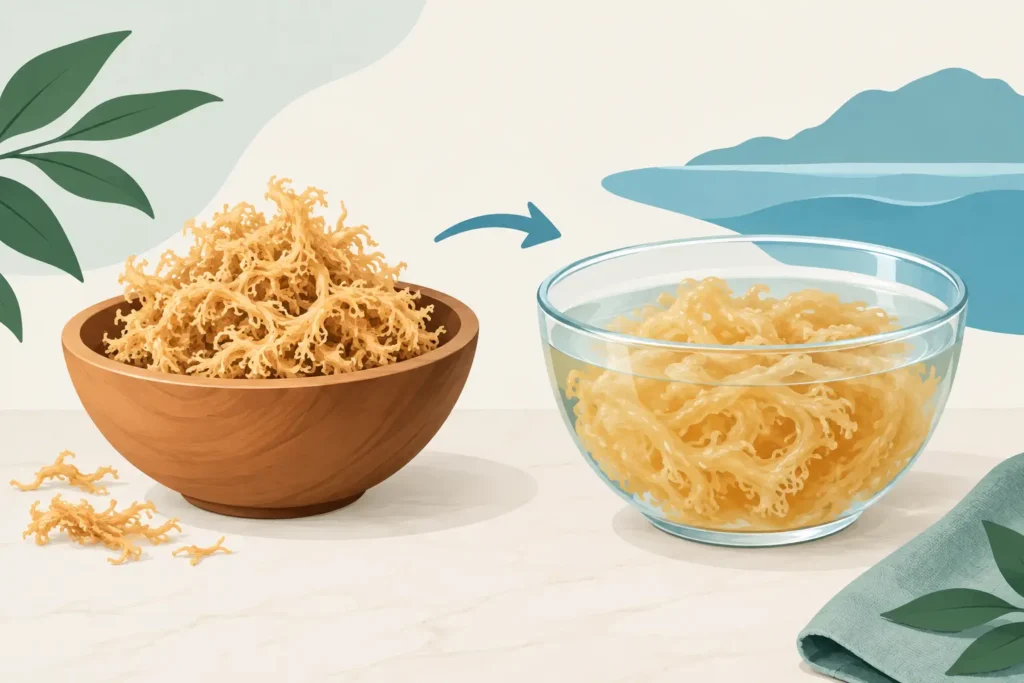
A bag of raw sea moss can look a little mysterious at first: sun-dried, salty, and naturally varied in shape and color. So, does sea moss need soaking before you use it? If you are working with whole, dried sea moss, yes. Soaking is the simple preparation step that softens the sea moss and readies it for blending into a smooth gel.
It is also a lovely pause in the process. Preparing sea moss by hand connects a modern kitchen routine to an island tradition that has been passed down through generations. With clean water, a little patience, and a few minutes of hands-on care, raw sea moss becomes an easy ingredient for smoothies, teas, soups, sauces, and more.
Does Sea Moss Need Soaking? It Depends on the Format
Not every sea moss product needs to be soaked. The answer depends on what you have in your kitchen.
Whole, dried sea moss should be rinsed and soaked before blending. It is dehydrated, so it needs time to rehydrate and soften. Once prepared, it can be blended with fresh water into a mild, versatile sea moss gel.
Sea moss gel is already prepared, so it does not need soaking. It can usually be spooned directly into your favorite recipe. Sea moss powder also does not require soaking, although some people prefer to stir it into a small amount of liquid first to help it blend evenly.
If you choose raw sea moss, look for a product with a clear origin story and careful handling practices. Wildcrafted sea moss from St. Lucia naturally has an organic, irregular appearance. It may range in color from gold to deeper purple tones depending on the variety and growing conditions. That natural variation is part of what makes whole sea moss so special.
Why Soaking Raw Sea Moss Matters
The purpose of soaking is practical. Dried sea moss is firm and compact. Water helps it expand, soften, and become easier to blend into the silky texture most people want for food and drink recipes.
A proper soak also gives you time to inspect the sea moss as you rinse it. Because it is a marine botanical, whole sea moss can occasionally have small bits of natural ocean material caught among the strands. Careful rinsing helps you remove any visible salt, sand, or debris before preparation.
Soaking is not meant to be complicated or overly precise. There is no need for a long list of special equipment or a strict ritual. A bowl, clean water, a strainer, and a blender are enough. The goal is simply to prepare the sea moss with care so it fits naturally into your everyday wellness routine.
How to Soak Sea Moss for a Smooth Gel
Start with a thorough rinse
Place the dried sea moss in a bowl or colander and rinse it under cool running water. Gently separate the strands with your hands as you rinse. Take a moment to remove any visible pieces of sand, shell, or other natural material.
Some people like to briefly soak the sea moss in water with a squeeze of lime or lemon before the final rinse. This can add a fresh scent, but it is optional. Plain clean water works well, especially if you prefer a neutral base for recipes.
Cover it with clean water
Transfer the rinsed sea moss to a clean bowl and cover it generously with filtered or spring water. It will expand as it absorbs water, so leave plenty of room in the bowl. The sea moss should be fully submerged.
Keep the bowl covered and place it in the refrigerator. Refrigerated soaking is a simple way to keep the preparation fresh while the sea moss softens.
Let it soften for 12 to 24 hours
For most dried sea moss, 12 to 24 hours is a useful soaking window. The exact time can vary based on the thickness of the strands, how dry the sea moss is, and the texture you prefer. By the end of the soak, it should look fuller, feel soft and slippery, and have a much lighter, more translucent appearance.
If your sea moss is still firm after 12 hours, give it more time. There is no benefit to rushing it into the blender while it is still stiff. On the other hand, leaving it for much longer than a day is usually unnecessary. Fresh water and a sensible soaking time tend to create the best starting point.
Blend with fresh water
Drain the soaking water, then give the softened sea moss one final rinse. Add it to a high-speed blender with fresh filtered or spring water. Begin with a modest amount of water and add more as needed until the mixture becomes smooth and gel-like.
There is no single perfect thickness. Use less water for a thicker gel that works well in sauces or skin-care blends, or a little more for a lighter gel that disappears easily into smoothies and drinks. Blend until there are no noticeable pieces remaining.
Store your prepared gel with care
Spoon the gel into a clean, airtight glass container and refrigerate it promptly. Homemade sea moss gel is best treated like a fresh kitchen ingredient. Use clean utensils each time, pay attention to its smell and appearance, and discard it if anything seems off.
For people who like to prepare ahead, freezing small portions can be a practical option. Ice cube trays make it easy to portion sea moss gel for individual smoothies, juices, or recipes without thawing an entire jar.
Common Soaking Questions
Can you use hot water to soak sea moss?
Cool or room-temperature water is generally the gentlest choice for preparing raw sea moss. Hot water may soften it more quickly, but it can also change the texture in ways that make blending less predictable. A slow refrigerated soak is easy, reliable, and well suited to a busy schedule.
Should you change the soaking water?
For a standard 12- to 24-hour soak, changing the water is not usually necessary. If you notice the water becoming cloudy after the first few hours or simply prefer to refresh it, you can drain and replace it once. What matters most is beginning with thoroughly rinsed sea moss and keeping it refrigerated while it soaks.
Can you eat soaked sea moss without making gel?
You can, though gel is usually the more enjoyable and flexible format. Soaked sea moss has a soft, slightly slippery texture that may not appeal to everyone on its own. Blending it into gel lets you add a spoonful to foods and drinks with ease while creating a more consistent texture.
What if the sea moss still smells like the ocean?
A mild, clean ocean scent is natural for raw sea moss. It should not smell sour, spoiled, or unpleasantly strong. A careful rinse and a fresh-water soak often soften the aroma. Avoid trying to mask an off smell with citrus or other ingredients. When in doubt, trust your senses and choose freshness first.
Bringing Sea Moss Into Everyday Recipes
Once your gel is ready, the most useful approach is to keep it simple. Add a spoonful to a fruit smoothie, stir it into herbal tea after it has cooled slightly, blend it into a homemade dressing, or use it as a subtle addition to soups and sauces. Because plain sea moss gel has a mild flavor, it can work quietly in recipes you already enjoy.
If you are new to sea moss, start with a small amount and see what fits your routine. A morning smoothie may suit one person, while another may prefer adding it to a weekend soup or a homemade face mask. Everyday wellness is more likely to last when it feels supportive rather than complicated.
At Ahai Life, that spirit begins with sea moss wildcrafted in St. Lucia and prepared with respect for its natural character. Taking the time to rinse, soak, and blend whole sea moss can be a small act of intention – one that brings a piece of island-inspired wellness from your kitchen to your daily rituals.