

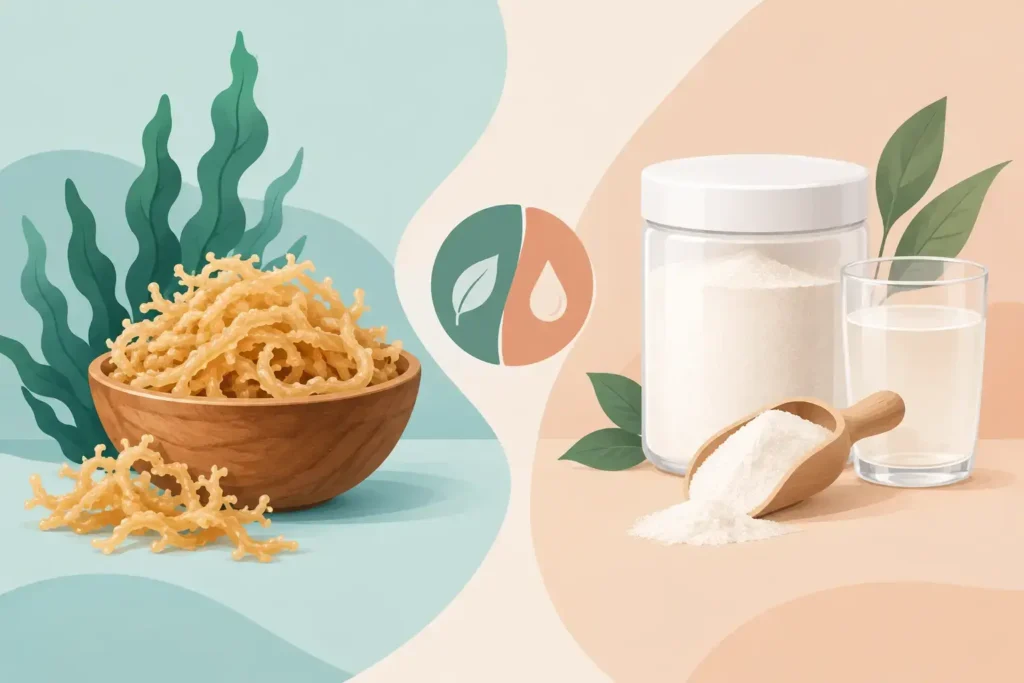
A morning smoothie can hold more than one wellness intention, which is why the question of sea moss vs collagen comes up so often. Both have earned a place in everyday routines, yet they come from entirely different sources and support different priorities. The better choice is not about following the loudest trend. It is about choosing an ingredient that feels aligned with how you eat, what you value, and what you can use consistently.
Sea moss brings a traditional marine botanical into drinks, meals, and personal-care rituals. Collagen is typically used as a concentrated protein supplement, often stirred into coffee, smoothies, or oatmeal. Understanding that difference makes the decision much clearer.
Sea Moss vs Collagen: The Essential Difference
Sea moss is a type of red algae that grows in coastal waters. It has a long history of use in Caribbean and Irish food traditions, where it has been prepared as a gel, drink, thickener, and nourishing pantry ingredient. In modern routines, it is commonly blended into smoothies, soups, teas, sauces, and even homemade skin-care recipes.
Collagen is a protein naturally found in the connective tissues of animals. Most collagen supplements are made from bovine, marine, chicken, or egg sources, then processed into powders, capsules, or ready-to-drink products. These supplements usually contain hydrolyzed collagen peptides, which are broken into smaller pieces for easy mixing.
The distinction is simple: sea moss is a whole-food-style marine ingredient with naturally occurring minerals and fiber, while collagen is a processed animal-derived protein supplement. Neither is automatically better. They serve different roles in a routine.
What Sea Moss Brings to the Table
Sea moss is valued for its naturally occurring mineral content, gentle texture, and versatility in the kitchen. Its exact nutritional makeup can vary based on the species, growing location, water conditions, and how it is harvested and prepared. That is one reason provenance matters.
Wildcrafted sea moss from the clear waters around St. Lucia carries a meaningful connection to island traditions and responsible harvesting practices. When sourcing sea moss, look for transparency about where it comes from, how it is handled, and whether the brand uses quality testing and purity standards. Sea moss should feel like a food ingredient you can welcome into your home, not a mystery powder with an oversized promise.
Once prepared as a gel, sea moss has a mild flavor that blends easily into everyday recipes. A spoonful can disappear into a berry smoothie, creamy soup, chia pudding, or morning tea without changing the meal you already enjoy. That flexibility is often its greatest strength.
Sea moss is also naturally vegan and plant-forward, making it a fitting choice for people who avoid animal products or simply want to bring more marine botanicals into their routines. It is not a complete protein source, so it should not be viewed as a replacement for protein-rich foods in a balanced diet.
What Collagen Is Designed to Provide
Collagen powders are primarily chosen for protein. They tend to be convenient, neutral in flavor, and easy to add to hot or cold beverages. For someone who already uses a morning coffee ritual and wants a simple protein supplement, collagen may feel like an easy fit.
However, collagen is not vegetarian or vegan in most forms. Its animal origin can be a deciding factor, especially for shoppers who prioritize plant-based eating, ethical sourcing, or a lower-animal-product lifestyle. The source also matters for people with specific dietary restrictions or allergies. Fish-based collagen, for example, is not suitable for someone with a fish allergy.
Collagen is often marketed with broad beauty and wellness language. It is wise to read those messages with care. A supplement is only one part of a larger picture that includes sufficient food, hydration, rest, movement, sun protection, and a routine that works for your real life.
Choosing Based on Your Everyday Needs
The most useful way to approach sea moss vs collagen is to start with your reason for adding something new. If you are looking for a versatile, vegan marine ingredient to blend into meals and drinks, sea moss may be the more natural choice. If your goal is to add an animal-derived protein supplement to a beverage, collagen may suit your routine.
Your preferred format matters, too. Sea moss gel is especially appealing for people who enjoy preparing smoothies, soups, sauces, and nourishing snacks at home. It turns wellness into a small, repeatable kitchen ritual. Powdered collagen can be more convenient for someone who wants to stir, sip, and head out the door.
There is room for personal preference here. Some people use one and have no interest in the other. Some use both, recognizing that they are not interchangeable ingredients. If you choose to use both, it can help to keep your routine simple rather than piling multiple supplements into one drink without a clear reason.
Consider Source, Not Just the Label
Wellness products can look similar on a shelf while telling very different sourcing stories. With sea moss, ask where it was harvested and whether the company shares meaningful details about its local partners and standards. Sea moss is deeply connected to coastal communities, so respectful sourcing is part of what makes the ingredient worth choosing.
With collagen, look beyond a front-label claim and identify the animal source, ingredient list, added flavors or sweeteners, and allergen information. A product that fits one person may not work for another because of dietary needs, taste preferences, or personal values.
For sea moss, a natural color and ocean-like scent can be part of an authentic experience. It does not need to be artificially bright or heavily flavored to belong in your routine. Quality is better reflected in responsible harvesting, careful cleaning, and transparent preparation than in flashy packaging.
A Gentle Note on Safety
Natural does not mean one-size-fits-all. Sea moss contains naturally occurring iodine, and iodine levels can vary. If you have a thyroid condition, are pregnant or nursing, take medication, or have questions about how sea moss fits your diet, speak with a qualified health professional before making it a regular habit.
Collagen also deserves the same thoughtful approach. Check the source carefully if you have food allergies, and remember that a supplement should complement your meals, not replace them. Start with the serving guidance on the product you choose and pay attention to how it fits your body and schedule.
Making Sea Moss Part of a Lasting Ritual
The best wellness habit is often the one that is easy to repeat. Rather than searching for a complicated protocol, begin with one familiar recipe. Add prepared sea moss gel to a smoothie you already make, blend it into a fruit-forward drink, or stir it into a warm soup for a subtle thickening texture.
At Ahai Life, our sea moss is wildcrafted in St. Lucia and created with intention for everyday wellness. The goal is not to make your routine more complicated. It is to help bring a traditional island ingredient from St. Lucia to your home in a form that feels approachable, rooted in nature, and easy to enjoy.
When deciding between sea moss and collagen, let your routine lead. Choose sea moss when you want a versatile, vegan marine botanical with a place in real food and daily rituals. Choose collagen when an animal-derived protein supplement fits your needs. And if neither feels right for your current season, that is useful information, too. Wellness works best when it is built with care, curiosity, and room to listen to yourself.