A beautiful sea moss product can be easy to spot, but sea moss purity is not something you can judge by color alone. A pale gold strand, a deep purple variety, or a clean-looking gel may all be part of a thoughtful routine. What matters is the story behind it: where it grew, how it was gathered, how it was handled, and whether the brand is willing to be clear about those choices.
For people bringing sea moss into smoothies, teas, soups, and personal-care rituals, purity is not a buzzword. It is the foundation of confidence. From St. Lucia to your home, the goal should be a marine botanical that feels connected to its origin and made for everyday wellness.
Sea Moss Purity Begins With Place
Sea moss is shaped by its environment. The waters where it grows influence its appearance, texture, and natural mineral profile, which is why origin deserves more than a small line on a package.
Wildcrafted sea moss is gathered from its natural marine environment rather than produced through conventional farming methods. That does not automatically make every wildcrafted product better, nor does the word itself guarantee quality. It does mean that responsible sourcing practices matter greatly. A brand should be able to share where its sea moss comes from and speak plainly about its relationship with the people who harvest it.
St. Lucia has a long connection to sea moss traditions, and local knowledge should be treated with respect. Sourcing through trusted island partners helps preserve that connection while creating a more accountable path from the water to the finished product. When a company cannot identify an origin, uses vague descriptions, or treats sourcing as a marketing afterthought, it becomes harder to know what you are bringing into your routine.
There is also a practical reason to care about place. Sea moss sold under one common name can come from different regions and may vary naturally in color, structure, and aroma. No single appearance tells the whole story. Origin and traceability provide more useful context than promises of a perfectly uniform product.
What Responsible Harvesting Looks Like
Harvesting is one of the quietest parts of the sea moss journey, yet it has a lasting effect on quality and on the marine environment. Responsible harvesting means taking only what can naturally regenerate and avoiding practices that unnecessarily disturb surrounding ecosystems.
This is where the word “wildcrafted” should come with care, not just romance. Sea moss is part of a living coastal system. Thoughtful harvesting respects seasonal rhythms, local experience, and the need to leave enough behind for continued growth. It also recognizes that island communities are not simply suppliers. They are keepers of traditions and knowledge that deserve fair, long-term partnerships.
For shoppers, it is reasonable to ask simple questions: Is the source named? Does the brand discuss its harvesting approach? Does it describe local partnerships with specificity and respect? You do not need a marine biology degree to recognize when a brand is offering meaningful information rather than broad, unsupported language.
Purity Is More Than a Clean Look
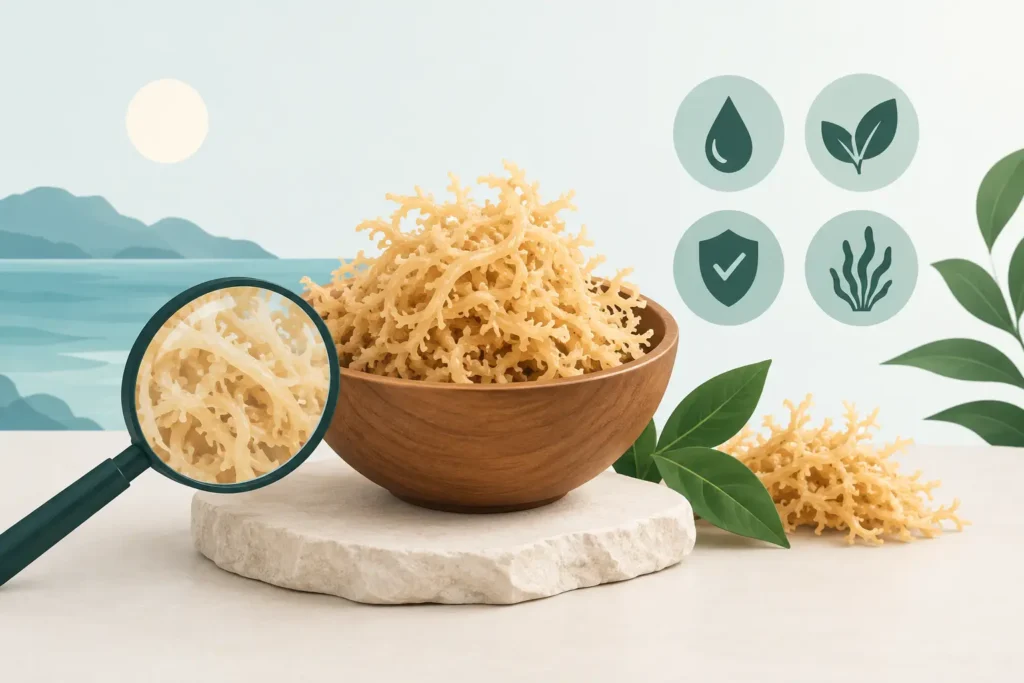
A common mistake is assuming that sea moss must look identical from batch to batch. In reality, natural variation is expected. Gold sea moss may range from light beige to warm amber. Purple varieties can differ in depth of color. Some pieces may be curlier, flatter, thicker, or finer than others.
These differences are not necessarily flaws. They can reflect the growing environment and the fact that sea moss is a whole marine botanical, not a manufactured powder designed to look the same every time.
At the same time, natural does not mean that every difference should be ignored. Before preparing dried sea moss, take a moment to look and smell. It should have a fresh, oceanic scent rather than an overly harsh or unpleasant odor. Check the package for signs of excess moisture, damage, or anything that appears out of place. Follow the storage instructions, and use clean hands and utensils when preparing it at home.
Rinsing and soaking are normal parts of preparing whole sea moss. Rinsing helps remove sea salt and any small bits of natural ocean material that may remain after harvesting and drying. This preparation is not evidence that the product was poorly made. It is part of working with a minimally processed ingredient from the sea.
Why Testing and Transparency Matter
Testing is one meaningful part of a sea moss purity standard, particularly when a product is intended for regular use. Because sea moss grows in the ocean, thoughtful quality practices can include screening for contaminants relevant to marine botanicals, along with careful handling and packaging procedures.
Still, testing should not become a vague badge used to end the conversation. The strongest brands pair quality testing with clear sourcing, responsible harvesting, and transparent product information. One cannot replace the others. A lab result does not explain origin, and a beautiful origin story does not replace quality controls.
Look for companies that communicate in a straightforward way. You should be able to understand what form of sea moss you are buying, where it comes from, and how it is processed. If a label makes sweeping claims without explaining the product itself, pause before purchasing.
Transparency also means being realistic. Sea moss is a food and wellness ingredient, not a cure-all. Brands that respect their customers do not need exaggerated promises to make sea moss feel valuable. Its appeal can be much simpler: a traditional marine botanical, prepared with care, that fits into nourishing daily rituals.
Choosing the Right Form for Your Routine
Purity and convenience can work together, but the best format depends on how you plan to use sea moss. Whole dried sea moss gives you the most hands-on connection to the ingredient. You rinse it, soak it, blend it into gel, and decide how it fits into your kitchen rhythm. That process takes a little time, but many people enjoy it as a grounding ritual.
Prepared gel may be a better fit for a busy schedule. The key is understanding its ingredient list, storage needs, and suggested use window. A simpler formula is often easier to assess, especially if you prefer sea moss without unnecessary additions.
Color varieties can also offer a natural point of choice. Gold, purple, and full-spectrum options each have their own character, but the best selection is not necessarily the most dramatic-looking one. Choose a format and variety that feels practical for your meals, beverages, or recipe experiments. Consistency in your routine matters more than chasing perfection.
Ahai Life centers this approach in wildcrafted sea moss sourced through trusted local partners in St. Lucia, with an emphasis on quality testing, authentic origins, and approachable ways to use sea moss at home.
A Better Way to Read a Sea Moss Label
A label should help you make a clear decision, not leave you guessing. Start with the product name and ingredient list. If you are buying dried sea moss, the ingredient list may be wonderfully short. For gel or blends, look closely at what else has been included and why.
Then consider the details around the label. Is the origin identified? Are preparation and storage directions easy to follow? Does the company explain whether the product is wildcrafted and how it approaches quality? These details create a fuller picture than a front-label claim alone.
It also helps to set aside the idea that “pure” must mean stripped down in every circumstance. A plain whole sea moss product and a thoughtfully made sea moss blend can both have a place. Purity is about honesty, careful handling, and a product that matches what it says it is. The right choice depends on your preferences and how you want to use it.
Common Questions About Sea Moss Purity
Does color determine sea moss quality?
Not by itself. Color can vary based on species, growing conditions, and natural exposure in the marine environment. A rich color may be beautiful, but it is not a stand-alone measure of purity. Source, handling, and transparency are more meaningful signals.
Does wildcrafted always mean better?
Not automatically. Wildcrafted sea moss can reflect a close connection to traditional harvesting and natural growing conditions, but responsible practices still matter. Look for named origins, respectful local partnerships, and clear quality standards.
Should sea moss smell like the ocean?
A mild ocean-like aroma is normal for a marine botanical. If the scent seems unusually strong, stale, or unpleasant, trust your judgment and review the product’s storage condition and instructions.
Can I use sea moss every day?
Many people choose to include sea moss in everyday meals or drinks, but individual needs vary. Follow product guidance, pay attention to how it fits your diet, and speak with a qualified healthcare professional if you have a medical condition, take medications, are pregnant, or have questions about dietary changes.
A trusted sea moss ritual does not have to be complicated. Start with a product whose origin is clear, prepare it with care, and let it become one small, intentional part of the way you nourish yourself.