

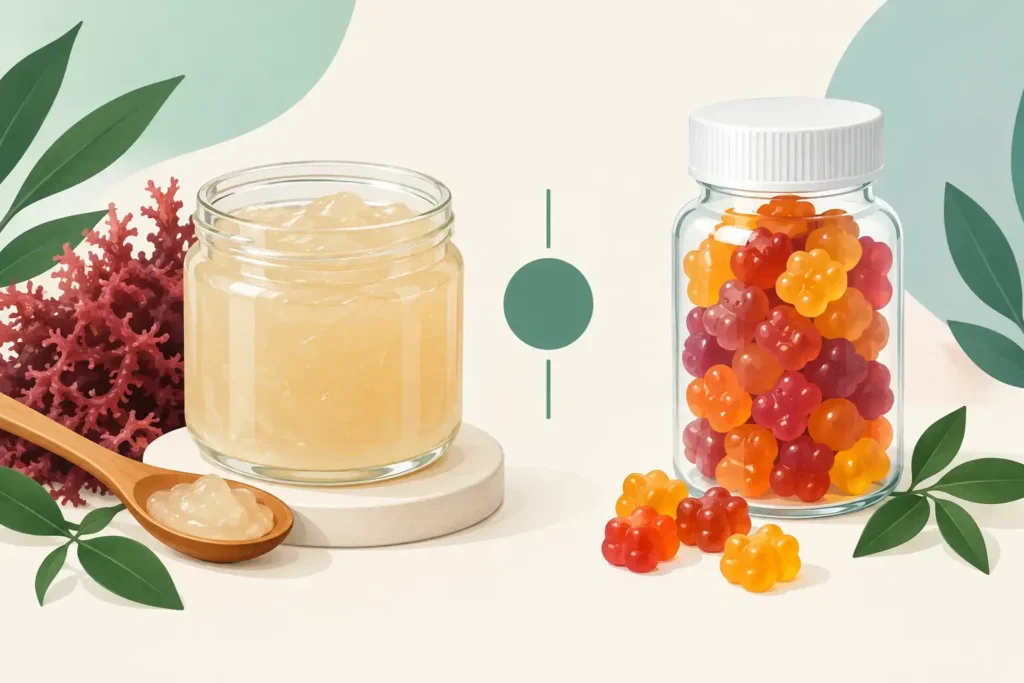
A spoonful blended into a morning smoothie and a gummy taken on the way out the door may both fit into a wellness routine, but they offer very different experiences. When comparing sea moss gel versus gummies, the best choice is not simply about which format is more popular. It comes down to how closely you want to work with the ingredient, what is in the finished product, and what you can comfortably make part of your everyday rhythm.
For those drawn to sea moss for its island roots and place in traditional food practices, gel often feels like the more familiar starting point. Gummies can be a convenient option, especially for busy schedules, but convenience is only one part of the decision.
Sea Moss Gel Versus Gummies: The Core Difference
Sea moss gel is typically made by soaking and blending cleaned sea moss with water until it reaches a smooth, spoonable consistency. It is a food-like format that can be added to smoothies, teas, juices, soups, sauces, and even some personal-care recipes. Its appeal is versatility: you can see it, measure it, and work it into foods you already enjoy.
Sea moss gummies are a finished supplement format. They usually contain sea moss alongside ingredients that create the familiar chewy texture and flavor, such as sweeteners, fruit flavors, pectin, gelatin, starches, or other functional ingredients. The exact formula varies widely from one product to another.
Neither format is automatically better for every person. Gel gives you flexibility and a closer connection to the original marine botanical. Gummies offer simplicity and portability. The better fit is the one that aligns with your ingredients standards and your actual routine.
Why Ingredient Transparency Matters
A sea moss gummy can look simple from the outside, but its label may tell a more layered story. Since gummies need to taste pleasant and hold their shape, they often include more than sea moss. That does not make them a poor choice. It does mean the ingredient list deserves a careful look, especially if you prefer products with minimal processing or are mindful of added sugars, dietary preferences, and flavoring sources.
With sea moss gel, the ingredient list is often more direct. A thoughtfully made gel may contain just sea moss and water, though you should still review the label for storage guidance and any added ingredients. This simplicity makes gel an appealing option for people who want to know exactly what they are adding to their food and drinks.
The source of the sea moss matters, too. Wildcrafted sea moss from St. Lucia carries a meaningful connection to the waters and communities where sea moss traditions have long been practiced. Responsible harvesting, trusted local partnerships, and quality testing help turn a beautiful origin story into a product you can feel good about bringing home.
Gel Brings Flexibility to Everyday Rituals
One jar of sea moss gel can move easily through a week of meals. Stir it into oatmeal, blend it into a fruit smoothie, add it to a warm cup of tea after it cools slightly, or incorporate it into homemade dressings and soups. Its mild character allows it to become part of your routine without asking you to completely change how you eat.
This flexibility is particularly helpful if you enjoy making wellness feel personal rather than prescribed. You can pair gel with ingredients that already suit your tastes, whether that is mango and ginger in a smoothie or lemon and herbs in a nourishing broth. It becomes an ingredient, not another task on your to-do list.
Gel also supports those who enjoy exploring sea moss beyond the kitchen. Traditional-inspired personal-care applications, such as simple face masks or hair treatments, are one reason some people appreciate keeping gel on hand. Use only fresh, properly stored gel and follow common-sense skin care practices, including a patch test for any new topical recipe.
Ahai Life’s founder-led recipe approach reflects this more creative side of sea moss. When an ingredient has a place in drinks, meals, and self-care rituals, it can feel less like a trend and more like a sustainable habit.
Gummies Make Consistency Easier for Some Routines
There is a practical case for gummies. If you travel frequently, dislike preparing smoothies, or simply need an option that fits in a desk drawer or handbag, gummies can remove friction. A pre-portioned format may help some people stay consistent when their mornings are rushed.
They can also be more approachable for someone who is curious about sea moss but hesitant about its taste or texture. A gummy does not require soaking, blending, refrigeration, or recipe planning. That convenience has value, especially during seasons when cooking at home feels less predictable.
Still, it is worth asking whether the format supports the kind of wellness practice you want to build. If your goal is to eat more intentionally and create a moment of care around your food, gel may offer more opportunity. If your goal is a simple, travel-friendly addition to an already full day, gummies may be more realistic.
Consider Storage, Preparation, and Cost Per Serving
Sea moss gel needs refrigeration and has a shorter shelf life than gummies. This is one of its most important trade-offs. You will need to use it within the recommended time frame, keep utensils clean, and pay attention to changes in smell, color, or texture. For someone who uses smoothies or tea regularly, that may be easy. For someone who rarely prepares food at home, it could lead to waste.
Gummies generally have a longer shelf life and are easier to store. They do not require a refrigerator and can be taken without preparation. However, a bottle may contain a relatively small amount of sea moss alongside other ingredients, so comparing serving sizes and the full supplement facts panel can help you understand what you are buying.
Cost should be considered in the same practical way. Rather than comparing the price of a jar with the price of a bottle, compare how many servings you are likely to use and whether the product will fit naturally into your life. A format you enjoy and use consistently may offer better value than one that sits untouched in the cabinet.
How to Choose a Sea Moss Format With Intention
Start with your routine, not the marketing. If you already make breakfast at home most days and enjoy experimenting with recipes, sea moss gel is likely to feel easy and rewarding. If your schedule involves early commutes, frequent travel, or little time in the kitchen, gummies may be the more workable choice.
Then consider what matters most to you on the label. Some people prioritize a short ingredient list. Others need a vegan gummy, lower added sugar, or a format that is easy to take while traveling. There is room for different preferences, as long as the product is clearly labeled and the sourcing story is one you trust.
Look for brands that are willing to be specific about where their sea moss comes from, how it is harvested, and how quality is handled. “Sea moss” is a broad category, but origin and care make a meaningful difference. Products created with intention should make it easier to understand what you are choosing, not harder.
A Gentle Place to Begin
If you are new to sea moss, gel can be a lovely introduction because it lets you begin with small amounts and discover the recipes you genuinely enjoy. Add it to a familiar smoothie or warm beverage and let it become part of a routine you already look forward to.
If gummies are the format you know you will reach for, choose them thoughtfully and keep the rest of your wellness practice grounded in nourishing food, hydration, movement, and rest. The most helpful choice is rarely the most complicated one. It is the one that respects both the ingredient’s origins and the life you are living.