

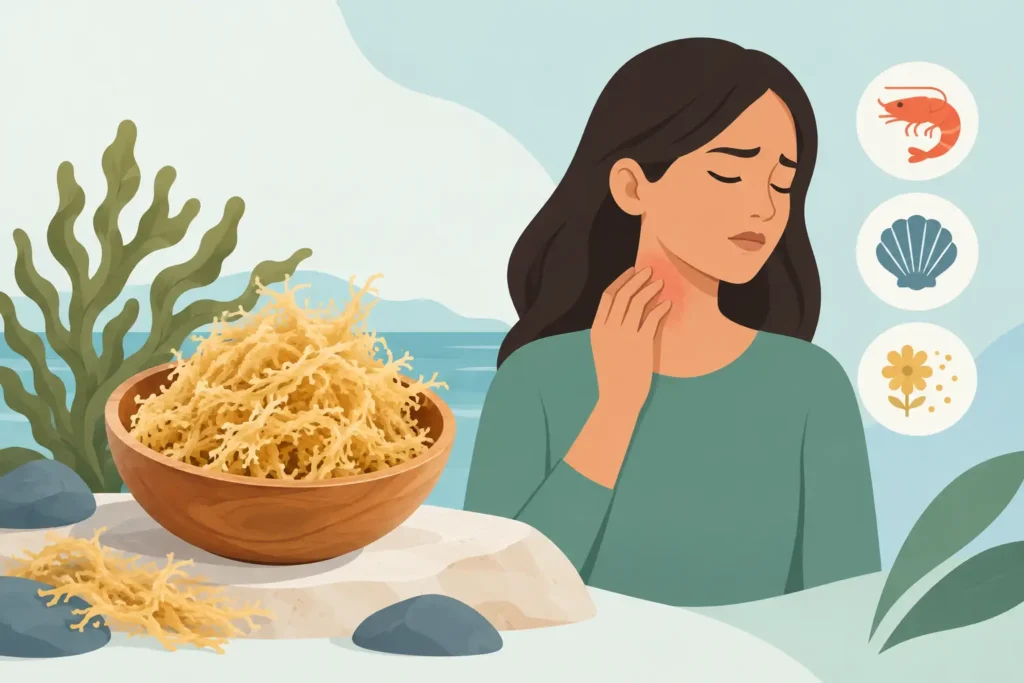
Sea moss allergens are a worthwhile consideration before you add this ocean-grown ingredient to your routine. A spoonful of sea moss gel in a smoothie may feel like a simple daily ritual, but anyone with a history of food allergies, sensitive skin, or reactions to marine ingredients should begin with care. The goal is not to create worry around a traditional botanical. It is to make room for an informed, comfortable experience.
Wildcrafted sea moss has long been part of Caribbean food traditions, including in St. Lucia, where it is prepared in drinks, recipes, and nourishing home rituals. Like any ingredient from nature, however, it may not agree with every person. Knowing what can cause a reaction, what is not technically an allergy, and when to pause can help you make choices that feel right for your body.
Can Sea Moss Cause an Allergic Reaction?
Yes, although sea moss allergies are not commonly reported, an allergic reaction is possible. Sea moss is a type of red algae, not a shellfish or fish. That distinction matters, but it does not make a reaction impossible. A person can react to sea moss itself, to a naturally occurring component, or to something introduced during harvesting, processing, or preparation.
Food allergies occur when the immune system mistakenly treats a substance as a threat. Symptoms can range from mild to serious, and they may begin shortly after eating an ingredient. Since individual sensitivities vary, there is no one-size-fits-all answer about who will react.
It is also helpful to separate an allergy from an intolerance or sensitivity. Digestive discomfort after trying a new food does not automatically mean an allergy. Still, repeated discomfort is your body asking for attention, and it is a good reason to stop using the product and speak with a qualified healthcare professional.
Sea Moss Allergens and Related Sensitivities
The phrase “sea moss allergens” can refer to more than the sea moss itself. For people who are prone to reactions, these are the main areas to consider.
Shellfish and fish allergies
Sea moss is not shellfish, so a shellfish allergy does not automatically mean you are allergic to sea moss. Yet marine ingredients can be harvested, handled, packaged, or prepared in settings where other ocean-based foods are present. Cross-contact can be a concern, particularly when sourcing and processing details are unclear.
If you have a severe fish or shellfish allergy, do not assume that sea moss is automatically safe because it is algae. Review the product information carefully and ask your allergist for guidance before trying it. This is especially true if you have experienced anaphylaxis or needed emergency treatment for an allergy in the past.
Iodine concerns
Sea moss naturally contains iodine, a mineral also found in other sea vegetables. Iodine is not considered a food allergen, but some people may have a medical reason to monitor their iodine intake. Those managing thyroid conditions, taking thyroid medication, or following a clinician-directed diet should ask their healthcare provider whether sea moss fits their routine.
A reaction that someone describes as an “iodine allergy” can have different causes, and it should not be self-diagnosed. If iodine has been raised as a concern in your medical history, personalized guidance is the safest next step.
Sensitivity to added ingredients
Plain sea moss and blended sea moss products are not always the same thing. Flavored gels, capsules, powders, gummies, and prepared beverages may include fruit, herbs, sweeteners, preservatives, or other ingredients that can trigger a reaction. Read the complete ingredient label, not just the front of the package.
This is particularly useful for anyone who avoids coconut, citrus, certain herbs, or common additives. A product can be made with care and still contain an ingredient that does not work for your individual needs.
Environmental contaminants and quality
Sea moss grows in the ocean, making responsible sourcing and quality practices meaningful. Marine botanicals may be exposed to sand, salt, microorganisms, or environmental contaminants depending on where and how they are harvested and processed. These concerns are different from a true allergy, but they can affect how a product is tolerated.
Look for brands that are transparent about origin, handling, and quality testing. Trusted local sourcing partners, responsible harvesting, and clear product information offer a better starting point than vague claims. At Ahai Life, the focus on wildcrafted St. Lucian sea moss and purity standards is part of honoring both island tradition and the people bringing it into their everyday wellness routines.
Signs to Watch For After Trying Sea Moss
Allergic reactions can look different from person to person. Mild symptoms may include itching in the mouth, hives, a rash, sneezing, nausea, stomach discomfort, or swelling around the lips. Some people may also notice skin irritation when using sea moss in a face mask, hair treatment, or other personal-care recipe.
Stop using sea moss if you notice symptoms that concern you. Do not continue taking small amounts in an effort to “get used to it.” That approach can be risky when an allergy is involved.
Trouble breathing, wheezing, throat tightness, faintness, rapid swelling of the face or tongue, or widespread hives require urgent medical care. Call 911 immediately if these symptoms occur. If you have been prescribed epinephrine for severe allergies, follow the plan provided by your clinician.
A Gentle Way to Try Sea Moss for the First Time
For adults without a known marine-food allergy or medical restriction, a slow introduction is often the most practical approach. Start with a small amount of a simple, single-ingredient sea moss product rather than a blend with many unfamiliar additions. Use it in a familiar food, such as a smoothie, soup, or oatmeal, so you can better notice how you feel afterward.
Give yourself time before having more. Trying several new wellness products in the same week can make it difficult to identify what caused a reaction or discomfort. Keep your routine simple, especially if you are naturally sensitive to foods or supplements.
For topical use, try a small patch test first. Apply a small amount to the inner arm, then wait and observe for redness, itching, burning, or swelling. A patch test cannot predict every possible reaction, but it can help you identify some contact sensitivities before applying a product more widely.
Children, pregnant or breastfeeding people, and anyone taking medication should use extra care with new wellness ingredients. A pediatrician, obstetric clinician, pharmacist, or other qualified healthcare professional can help you make a decision based on your specific circumstances.
When to Speak With an Allergist
An allergist can be especially helpful if you have had a reaction after eating sea moss, have multiple food allergies, or are unsure whether a past symptom was related to shellfish, fish, iodine, or another ingredient. They can assess your history and determine whether testing or a supervised food challenge is appropriate.
Bring the exact product label or ingredient list to your appointment when possible. Details such as the product format, serving size, flavoring, and how quickly symptoms appeared can help create a clearer picture. This is more useful than trying to solve the question through trial and error at home.
Sea moss can be a beautiful addition to a kitchen ritual, but wellness is never about pushing through discomfort. Choose ingredients with intention, pay attention to your body, and let careful sourcing and a thoughtful first try guide the experience.