

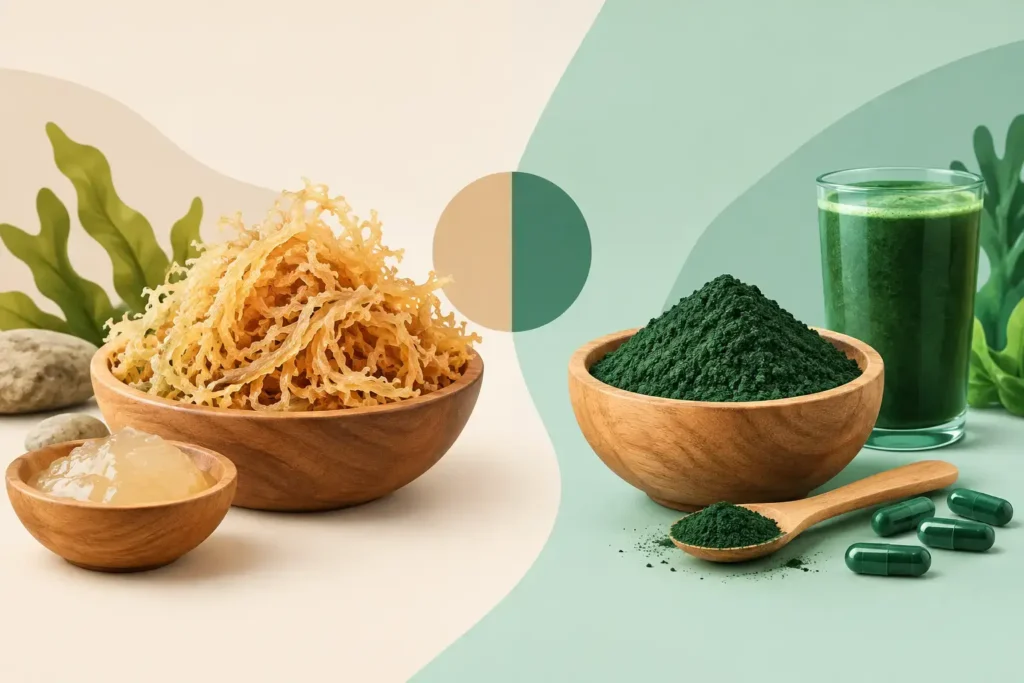
A morning smoothie can make sea moss versus spirulina feel like a simple choice between two green wellness ingredients. Yet they come from very different places, bring different textures to the kitchen, and suit different daily rituals. The better choice is not necessarily the one with the bigger reputation. It is the one you will enjoy using consistently, sourced with care and made for your real routine.
Sea moss carries a long tradition in Caribbean communities, including St. Lucia, where it has been prepared in drinks, gels, and nourishing home recipes for generations. Spirulina has its own longstanding history as a nutrient-dense blue-green algae used around the world. Both can have a place in a thoughtful wellness practice, but they are not interchangeable.
Sea Moss Versus Spirulina at a Glance
Sea moss is a type of red algae, often recognized for its naturally occurring minerals and its ability to form a smooth gel when prepared. Wildcrafted sea moss is harvested from marine environments, then carefully cleaned, dried, and rehydrated to make sea moss gel. Its mild, oceanic character often disappears easily into recipes when paired with fruit, citrus, spices, or plant-based milk.
Spirulina is a blue-green algae, typically sold as a deep green powder or tablet. It has a concentrated, earthy flavor that some people enjoy in smoothies, while others find it takes time to get used to. Unlike sea moss, it does not create a gel or add body to food. It is generally treated as a powdered add-in rather than a versatile recipe ingredient.
The simplest distinction is this: sea moss is often chosen for its versatility in food and self-care rituals, while spirulina is commonly chosen as a concentrated powder for drinks and supplements. Your preference may come down to flavor, format, and what feels easiest to maintain.
How Their Nutritional Profiles Differ
Both ingredients contain naturally occurring nutrients, but their profiles and serving styles are different. Sea moss is appreciated for its naturally occurring mineral content, including iodine, which is why sourcing and reasonable use matter. Its exact nutrient makeup can vary based on growing conditions, species, harvesting location, and preparation.
Spirulina is especially known for protein and pigments such as phycocyanin, which gives it its rich blue-green color. It also contains vitamins and minerals, although nutrition can vary by product and growing conditions. Because it is sold in a concentrated powdered format, a small scoop can feel like a noticeable addition to a smoothie or juice.
Neither ingredient needs to carry the weight of your entire wellness routine. A balanced diet, hydration, movement, rest, and meals you genuinely look forward to still matter most. Think of sea moss or spirulina as a supportive ingredient, not a shortcut or a replacement for varied nutrition.
A note on iodine and individual needs
Sea moss naturally contains iodine, a nutrient that supports normal thyroid function. The amount can vary widely, so more is not always better. People with thyroid conditions, those who are pregnant or nursing, and anyone taking medications should speak with a qualified healthcare professional before adding sea moss regularly.
Spirulina also deserves thoughtful purchasing. Quality matters because algae can absorb contaminants from their environment. Choosing products from brands that prioritize testing, purity standards, and transparent sourcing is a practical part of responsible wellness.
The Biggest Difference Is How You Use Them
For many households, texture and usability decide the question faster than a nutrition panel. Prepared sea moss gel has a neutral-to-mild flavor and a soft, silky consistency. A spoonful can blend into smoothies, oatmeal, soups, sauces, tea, homemade fruit drinks, and even face masks. It is an ingredient that can quietly become part of what you already make.
Spirulina is usually more noticeable. Its bold green color can turn a berry smoothie into a forest shade, and its savory, slightly marine taste may be strongest in simple recipes. It works well for people who enjoy green smoothies, juices, energy bites, or a quick daily powder ritual. If you prefer keeping your routine minimal, that directness can be a benefit.
Sea moss may feel more approachable if you like making recipes from scratch or want an ingredient that moves beyond the blender. Spirulina may be a better fit if you want a measured powder that takes seconds to stir into a drink. Neither approach is more committed or more “well.” It simply reflects how you like to care for yourself.
Why Sourcing Matters for Sea Moss
With a marine botanical, origin is part of the story. Sea moss can be wildcrafted or cultivated, and those terms should not be treated as interchangeable. Wildcrafted sea moss grows in its natural ocean environment and is gathered with attention to seasonality and responsible harvesting practices. Cultivated sea moss is grown through farming methods, which can offer consistency but comes with its own sourcing questions.
When choosing sea moss, look beyond a bright color or a dramatic wellness promise. Ask where it was harvested, how it was handled, whether the company shares its purity practices, and whether it respects the communities connected to the ingredient. Clear answers are a sign of care.
Ahai Life centers wildcrafted sea moss from St. Lucia, working with trusted local sourcing partners and honoring the island traditions that shaped its use. That connection from St. Lucia to your home is not just a detail on a label. It is a reminder that wellness ingredients have roots, people, and places behind them.
Can You Use Sea Moss and Spirulina Together?
You can, if both fit your needs and you enjoy the combination. Sea moss gel can create a smooth base in a fruit smoothie, while a small amount of spirulina adds color and its distinct green character. Start gently rather than adding large amounts of several new ingredients at once. This makes it easier to notice what tastes good and what agrees with you.
A practical option is to use them at different times. You might blend sea moss into breakfast recipes during the week, then reserve spirulina for the occasional smoothie when you want its bolder flavor. There is no need to stack every wellness ingredient into one glass.
If you are new to either ingredient, introduce one at a time. Follow product directions, pay attention to how you feel, and let your routine develop at a comfortable pace. People with allergies, medical conditions, or medication concerns should check with a healthcare professional before making dietary changes.
Choosing the Right Fit for Your Everyday Ritual
Choose sea moss if you want a traditional marine ingredient with a mild profile, a gel texture, and room to experiment in drinks, meals, and personal-care recipes. It can be especially appealing for people who value provenance and want to bring an island-inspired ingredient into everyday cooking.
Choose spirulina if you enjoy green drinks, prefer a powdered format, and do not mind a stronger flavor. Its convenience can make sense for a quick, repeatable smoothie habit.
Choose both only if doing so adds enjoyment rather than pressure. Wellness does not need a crowded counter or a complicated schedule. A good ritual is one that feels nourishing, realistic, and connected to ingredients you can trust.
The next time you reach for a smoothie ingredient, let your choice be guided by more than a trend. Consider where it comes from, how it fits your meals, and whether it gives you a small, steady moment of care in the middle of a full day.