

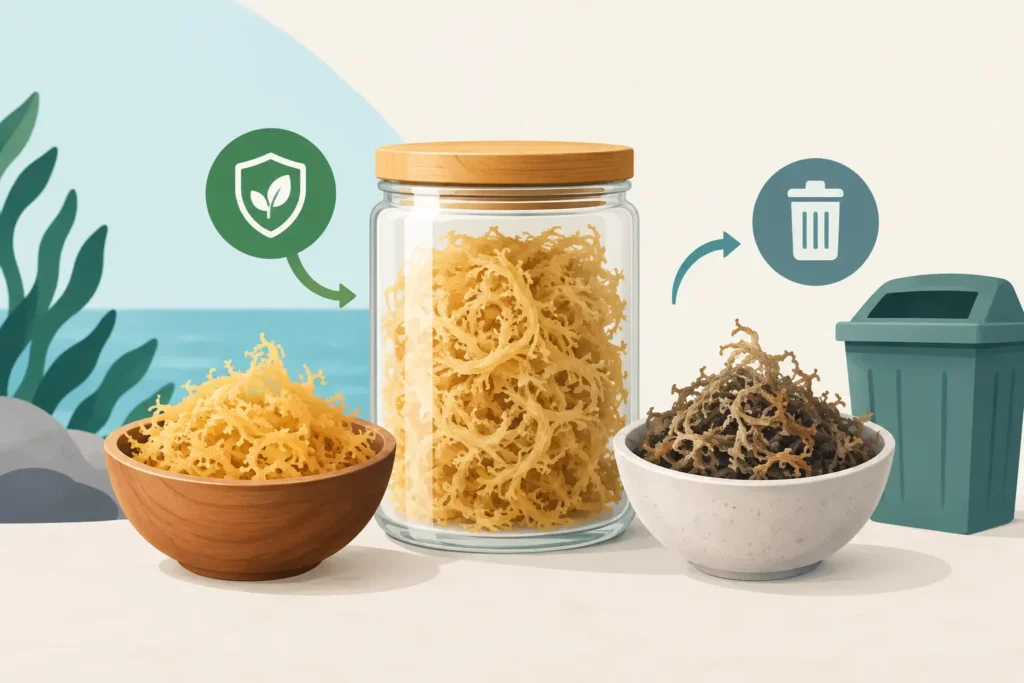
A jar of sea moss gel can look perfectly normal right up until the moment it is not. That is why sea moss expiration is less about guessing from a date on the label and more about knowing the form you have, how it has been stored, and what your senses are telling you.
Wildcrafted sea moss is a traditional marine botanical with a place in many everyday routines, from smoothies and soups to sauces and personal-care recipes. Like any natural ingredient, it deserves simple, thoughtful care. A clean kitchen habit can help you enjoy every batch with confidence while avoiding the temptation to keep something past its best.
Sea Moss Expiration Starts With the Form You Have
There is no single expiration timeline for every type of sea moss. Dry raw sea moss, prepared gel, and frozen gel each have different needs because moisture changes everything. The more water an ingredient contains, the more quickly it can spoil.
Dry raw sea moss is generally the longest-lasting option. When it has been thoroughly dried, kept away from moisture, and stored in a sealed container in a cool, dry cupboard, it can often stay fresh for many months. Always follow the package’s best-by date first, since the harvesting, drying, packaging, and testing process can vary by supplier.
Sea moss gel has a much shorter window. Gel is made by rinsing and soaking sea moss, then blending it with water. That fresh, hydrated texture is what makes it easy to add to a morning smoothie or a favorite recipe, but it also means refrigeration matters. A homemade or freshly prepared gel is commonly best used within about two to four weeks in the refrigerator, depending on how cleanly it was prepared and handled.
Freezing is a practical choice for anyone who does not use gel every day. Frozen gel portions can keep their quality for several months. Ice cube trays or small freezer-safe containers make it easier to thaw only what you plan to use, rather than repeatedly warming and chilling an entire jar.
Best-By Dates and Opened Containers
A best-by date is helpful, but it is not a substitute for proper storage. It usually refers to the product’s expected quality while unopened and kept under the recommended conditions. Once a package is opened or raw sea moss has been made into gel, the clock changes.
Write the preparation date on your jar of gel with a piece of tape or a washable label. It takes seconds and removes the uncertainty that comes from trying to remember whether you made it last weekend or three weeks ago. If you freeze some, mark that date too.
How to Tell When Sea Moss Has Gone Bad
Natural sea moss can have a distinct ocean-like aroma, especially before it is rinsed and prepared. That does not automatically mean it has spoiled. The key is noticing a change from its normal state.
Fresh sea moss gel should look smooth and gel-like, with a clean, mild scent. Color can vary naturally depending on the sea moss variety, including gold and purple types. What should not vary is the presence of obvious spoilage.
Discard sea moss gel if you notice any of the following:
- Visible mold, including fuzzy spots or unusual dark growth
- A sour, rancid, rotten, or sharply unpleasant smell
- Bubbling, foaming, or pressure in the container when it was not expected
- A major color change that is not consistent with the original sea moss
- A slimy, watery, or separated texture paired with an off odor
One small patch of mold is not something to scoop around. Because gel is moist and blended, mold can spread beyond the spot you can see. When in doubt, it is safer to discard the full jar and begin again with a clean container.
Dry raw sea moss tells a slightly different story. It should feel dry, not damp, sticky, or unusually soft. If it has developed visible mold, an unpleasant odor, or signs of moisture exposure, do not use it. A few natural variations in shape, color, and texture are normal for wildcrafted sea moss. Spoilage is about unwanted change, not perfection.
Storage Habits That Protect Freshness
Good storage begins before you make your gel. Keep dry raw sea moss tightly sealed and away from steam, direct sunlight, and humid areas of the kitchen. The cabinet above the stove may be convenient, but heat and moisture can shorten the life of a dried botanical.
When preparing sea moss gel, start with clean hands, clean tools, and a thoroughly washed blender. Use fresh water and a clean glass jar with a lid. Refrigerate the gel promptly after blending, ideally toward the back of the refrigerator where temperatures tend to remain steadier than they do in the door.
A clean, dry spoon makes a real difference. Avoid dipping a spoon into the jar after it has touched food, a smoothie, or your mouth. Those tiny introductions of moisture and food particles can speed up spoilage. Instead, scoop out what you need, close the lid, and return the jar to the refrigerator.
If you make larger batches, divide the gel into smaller containers. Opening one small jar frequently is easier on freshness than opening the same large jar every day. For busy routines, freeze part of a fresh batch as soon as it is made, then move a portion to the refrigerator when you are ready to use it.
Can You Extend Sea Moss Gel With Citrus?
Some home recipes include lime or lemon juice, and citrus can contribute flavor and acidity. Still, it should not be treated as a guarantee that gel will stay fresh indefinitely. The safest approach remains simple: prepare with care, refrigerate promptly, use the gel within a reasonable timeframe, and discard it at the first sign of spoilage.
Adding ingredients such as fruit, herbs, sweeteners, or juices can also change the storage timeline. Once you turn sea moss gel into a flavored blend, follow the shortest shelf-life expectation among the ingredients. A plain gel is usually easier to assess and store than a mixture with several fresh additions.
A Simple Routine for Less Waste
The most practical approach is to prepare only the amount you expect to use in the next couple of weeks. If your routine includes a daily smoothie, a small refrigerated jar may be just right. If you use sea moss a few times a week, freeze most of the batch in portions and keep a smaller amount ready in the fridge.
This approach respects both your time and the ingredient itself. Wildcrafted sea moss comes from a living marine environment and carries a story of place, harvest, and careful preparation. Choosing a responsibly sourced product, then storing it well at home, helps honor that journey from St. Lucia to your kitchen.
At Ahai Life, that sense of care is part of the intention behind making traditional sea moss more approachable for everyday wellness. Whether you blend it into breakfast, stir it into a warm meal after cooking, or experiment with a recipe of your own, freshness should always come first.
When You Are Unsure, Let It Go
It can feel frustrating to throw away a jar that is only partly used, especially when there is no obvious expiration date staring back at you. But an uncertain smell, questionable texture, or unexplained change is a good reason to start fresh. Sea moss is easy to prepare again, and peace of mind is worth more than stretching a batch too far.
A labeled jar, a cold refrigerator, and a clean spoon are small rituals, but they make sea moss easier to enjoy as part of a steady, nourishing routine. Trust the date, trust your senses, and give each batch the care it deserves.