A bag of dried sea moss can look simple, but its journey from the water to your kitchen is not. When comparing wildcrafted versus farmed sea moss, the meaningful differences are less about which one looks prettier and more about origin, harvesting practices, handling, and the transparency behind it.
Sea moss has long been part of Caribbean food and wellness traditions, including in St. Lucia, where ocean-grown varieties are prepared in drinks, gels, soups, and everyday recipes. As more people bring this traditional marine botanical into modern routines, knowing how it was sourced helps you choose with greater care.
What Does Wildcrafted Sea Moss Mean?
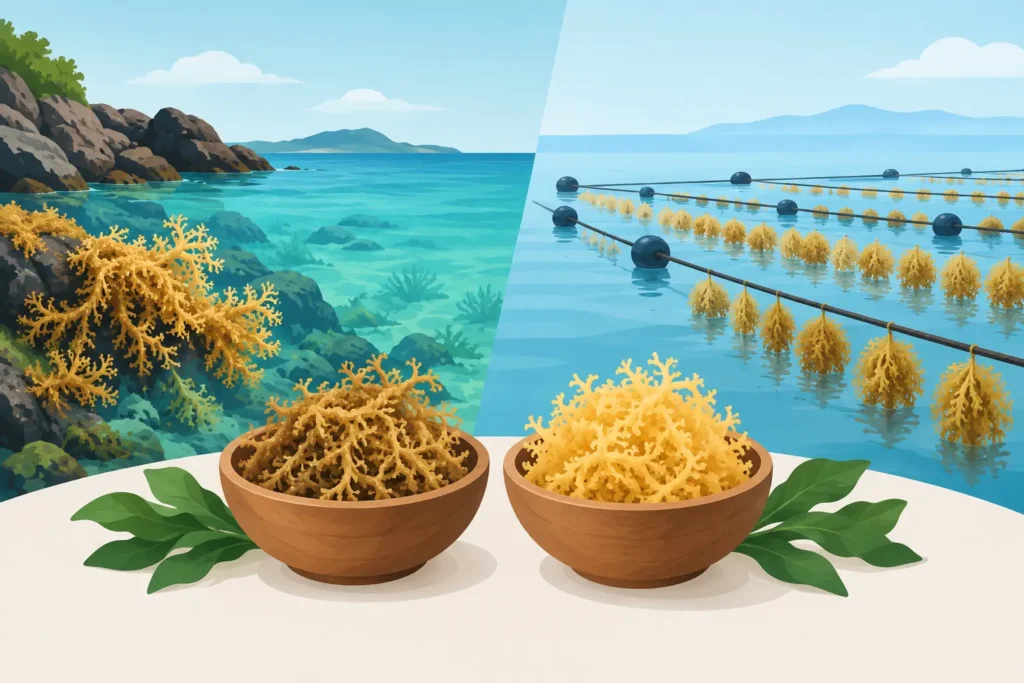
Wildcrafted sea moss grows naturally in its native marine environment. Rather than being planted on lines, ropes, or managed plots, it attaches to rocks and reefs and grows according to the conditions of the sea: sunlight, water movement, seasonal changes, and the mineral character of its surrounding waters.
Responsible wildcrafting is not simply collecting whatever is available. It calls for local knowledge and restraint. Harvesters should take only mature sea moss, leave enough behind for natural regrowth, and avoid damaging the surrounding habitat. These practices matter because wild sea moss is part of a living coastal ecosystem, not just a raw ingredient.
For many people, the appeal of wildcrafted sea moss is its close connection to place. Sea moss harvested from St. Lucian waters carries a story of island traditions, local partnerships, and a marine environment that has shaped its growth. That connection can be meaningful, but it should be supported by clear sourcing information rather than broad marketing language.
Wildcrafted sea moss may vary in color, shape, and texture from one batch to another. Gold, purple, and fuller-spectrum varieties can each look different, and natural variation is expected. The ocean does not produce identical harvests, which is part of what makes provenance worth asking about.
How Farmed Sea Moss Is Grown
Farmed sea moss is cultivated in managed ocean or coastal environments. Depending on the operation, growers may attach sea moss to ropes, nets, lines, or other structures where it can grow under more controlled conditions. Farming can make production more consistent and may reduce pressure on naturally occurring sea moss beds when it is managed thoughtfully.
That does not make farmed sea moss automatically lower quality. Well-run sea moss farms can provide reliable supply, support local livelihoods, and create a more predictable growing process. For someone who values consistency in appearance, availability, or texture, farmed sea moss may be a practical choice.
At the same time, farming practices vary widely. Water quality, site selection, harvesting schedules, drying methods, and post-harvest handling all influence the finished product. A label that says “farmed” does not answer every question, just as a label that says “wildcrafted” does not guarantee responsible practices on its own.
The better question is not which category wins in every situation. It is whether the seller can explain where the sea moss came from, how it was harvested or grown, and what steps were taken to protect its quality.
Wildcrafted Versus Farmed Sea Moss: The Key Differences
The most noticeable difference is the growing environment. Wildcrafted sea moss develops on its own in natural waters, while farmed sea moss is grown through an intentional cultivation process. That distinction can affect the product’s story, seasonal variation, and supply, but it does not give you a complete picture of purity or care.
Traceability is often where the comparison becomes most useful. A transparent brand should be able to identify the geographic source of its sea moss and describe its relationship with harvesters or growers. “Ocean-grown” is a broad phrase. “Wildcrafted in the waters of St. Lucia through trusted local sourcing partners” offers a clearer sense of origin.
Availability is another trade-off. Wildcrafted sea moss depends on natural growth cycles, weather patterns, and responsible harvesting limits. That can mean seasonal variation or a less uniform appearance. Farmed sea moss can be easier to produce at scale, which may make it more widely available throughout the year.
Price may also differ. Wildcrafted sea moss can reflect the work of selective harvesting, smaller-scale supply, local expertise, and careful handling. A lower price is not always a warning sign, and a higher price is not proof of quality. Still, unusually vague sourcing paired with an unusually low price is a good reason to pause and ask more questions.
Why Responsible Harvesting Matters
Sea moss grows within a delicate marine environment. When harvesting is rushed or excessive, the impact can reach beyond the sea moss itself. Responsible practices help preserve the natural beds that support marine life and allow future harvests to remain possible.
This is why culturally respectful sourcing matters, too. In places where sea moss has been used across generations, local harvesters often hold practical knowledge about tides, growing areas, and appropriate harvesting periods. Working with those communities honors the tradition behind the ingredient while helping keep its benefits connected to the people and places that have cared for it.
At Ahai Life, our approach is rooted in wildcrafted sea moss from St. Lucia and trusted local sourcing relationships. We believe origin should be more than a line on a package. It should reflect intention, respect for island wellness traditions, and a commitment to quality from the water to your home.
What to Look for Before You Buy
Choosing sea moss should feel straightforward, even when product claims are not. Start with the information a company is willing to share. Look for a specific source region rather than a vague country-of-origin statement, and seek out details about whether the sea moss is wildcrafted or farmed.
Quality testing and purity standards are also worth considering. Sea moss comes from the ocean, so responsible brands take testing and careful handling seriously. Ask how the sea moss is cleaned, dried, stored, and evaluated before it reaches you. Clear answers build more confidence than dramatic promises.
Pay attention to ingredients as well. Plain dried sea moss should be just that: sea moss. If you are buying gel or a prepared product, read the full label to understand what else has been added. Convenience can be helpful for everyday wellness, but transparency should still come first.
Finally, be cautious with claims that make sea moss sound like a cure-all. Sea moss can be a nourishing, versatile ingredient to enjoy in a balanced lifestyle, but it is not a replacement for medical care, varied meals, or guidance from a qualified health professional. If you are pregnant, nursing, managing a health condition, or taking medication, check with your clinician before adding new supplements or concentrated wellness products to your routine.
Bringing Sea Moss Into Everyday Rituals
The best sea moss is the one you can use with confidence and consistency. Dried sea moss can be rinsed, soaked, blended into a gel, and added to smoothies, juices, soups, sauces, or homemade personal-care recipes. Its mild flavor makes it especially easy to fold into foods you already enjoy.
You do not need an elaborate routine to make it part of your week. A spoonful of prepared sea moss gel in a morning smoothie, a blended fruit drink, or a simple soup can be enough. Start with familiar recipes, notice what feels good in your routine, and keep the process approachable.
Choose a source that lets you feel connected to what you are bringing home. When sea moss is thoughtfully harvested, clearly identified, and handled with care, it becomes more than another wellness trend. It becomes a small, grounded way to honor nature, island tradition, and the daily rituals that help you feel cared for.