

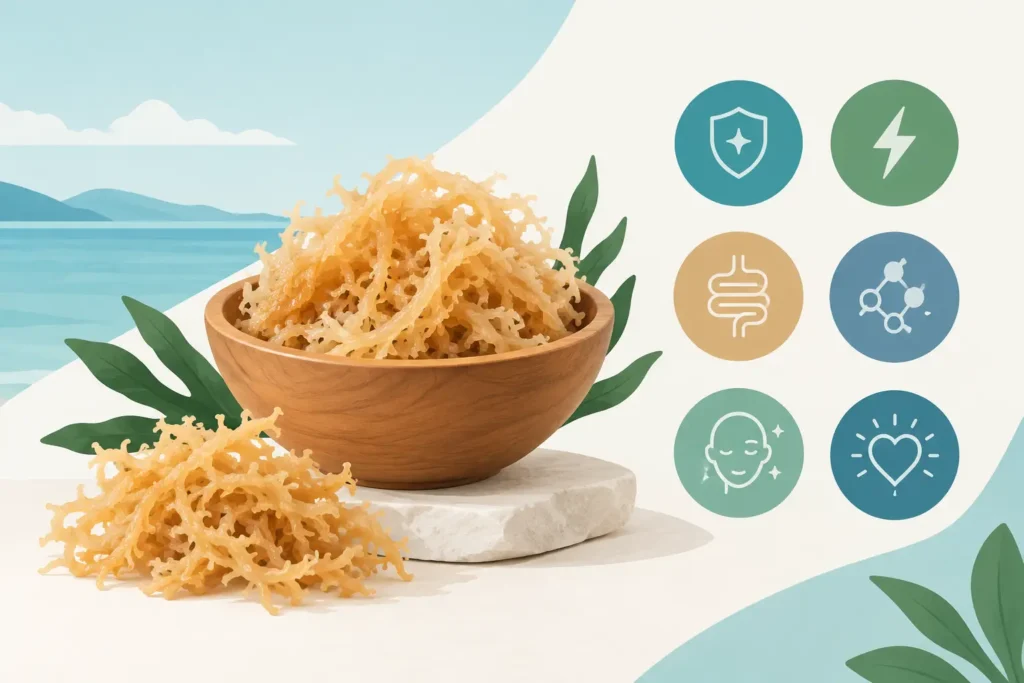
A spoonful of sea moss gel can disappear into a smoothie, soup, or morning tea without changing the rhythm of your day. That simple versatility is part of its appeal, but sea moss minerals are what prompt many people to look more closely at this traditional marine botanical. The details matter: where sea moss grows, how it is harvested, how it is prepared, and how it fits into the wider pattern of a nourishing lifestyle.
For generations across Caribbean communities, sea moss has been valued as a familiar food ingredient. Today, it has found a place in modern kitchen rituals because it is approachable, flexible, and rooted in nature. Rather than looking for one ingredient to do everything, think of sea moss as a thoughtful addition to the meals and routines you already enjoy.
What are sea moss minerals?
Sea moss is a type of red algae that grows in coastal waters. Like other marine plants, it absorbs naturally occurring compounds from the environment around it. Its mineral profile can include iodine, potassium, magnesium, calcium, iron, and trace minerals, though the specific amounts can vary widely.
That variation is worth understanding. Sea moss is not one uniform ingredient with a guaranteed nutrient profile. Its makeup depends on the species, the waters where it grows, seasonal conditions, and how it is processed. A label or nutrition panel is always the best source for information about a particular product.
The word “minerals” can make sea moss sound complicated, but its place in a routine does not need to be. Minerals are naturally occurring nutrients that the body uses in many everyday processes. Whole foods, varied meals, and mindful habits all contribute to a balanced approach. Sea moss can be one beautiful part of that picture, not a replacement for it.
A naturally varied marine ingredient
Wildcrafted sea moss carries the character of its growing environment. Sea moss sourced from the clear waters around St. Lucia is connected to a long island tradition of using marine botanicals in food and wellness practices. This origin is more than a backdrop. It speaks to the local knowledge, careful handling, and respect for the sea that should shape the journey from shore to home.
Wildcrafted does not mean that every batch will look or taste identical. Natural variations in color, texture, and aroma are expected. Gold and purple sea moss, for example, may offer a different visual experience in the kitchen, while both remain part of the broader sea moss tradition. What matters is choosing a product with clear sourcing and careful quality practices.
Why sourcing matters for sea moss minerals
Sea moss grows in the ocean, so the quality of its environment and the care taken after harvest deserve attention. Responsible sourcing begins with trusted local partners who understand the coastline and harvest with the long-term health of marine habitats in mind.
A thoughtful process also includes cleaning, drying, and quality testing. These steps help support purity and give customers more confidence in what they bring into their homes. When shopping for sea moss, look beyond bold claims and ask practical questions: Where was it harvested? Is the origin clearly shared? Does the brand explain its quality standards? Is the ingredient prepared with care?
At Ahai Life, this connection to St. Lucia is central to the story. Sea moss is wildcrafted with respect for island traditions and made for everyday wellness, so customers can bring a piece of that nature-inspired practice into their own routines.
Transparency is especially valuable because sea moss has become widely popular. Not every product has the same origin, processing standards, or relationship to the communities that have used sea moss for generations. Knowing the source helps you make a choice that feels aligned with your values, whether you care most about authenticity, responsible harvesting, or ingredient simplicity.
How to use sea moss in everyday meals
The most sustainable wellness habit is usually the one that fits naturally into your life. Sea moss gel is popular because it can blend into foods you already make, adding a smooth texture without requiring a complicated new ritual.
Start small and follow the serving guidance for your product. A spoonful in a fruit smoothie is an easy first step, especially with mango, pineapple, berries, or banana. The creaminess of the fruit works well with sea moss gel, and the flavor is often subtle when blended with familiar ingredients.
It can also be stirred into oatmeal, soups, sauces, or homemade dressings. Some people add it to herbal tea, while others use it in puddings, frozen treats, or baked recipes. If you prefer a routine with less prep, make a batch of sea moss gel and store it according to the product directions so it is ready when you are.
Let your preferences lead
There is no single best way to take sea moss. A smoothie may make sense for someone who likes a quick breakfast, while a soup or warm beverage may feel more grounding during cooler months. The goal is not to force a strict protocol. It is to find a use that you can return to with ease.
If the ocean-like aroma is new to you, pair sea moss with bright flavors such as citrus, ginger, cinnamon, vanilla, or tropical fruit. These combinations can make the experience feel more familiar while honoring the ingredient’s natural character.
A balanced approach to sea moss
Sea moss can be a welcome addition to a food-focused wellness routine, but more is not always better. Because sea moss naturally contains iodine and its mineral content varies, serving size matters. People with thyroid conditions, those who are pregnant or breastfeeding, and anyone taking medication or managing a health condition should speak with a qualified healthcare professional before adding sea moss to their routine.
This is not about making sea moss feel intimidating. It is about choosing care over hype. A quality ingredient deserves a thoughtful place in your day, alongside nourishing meals, hydration, rest, movement, and the guidance that fits your personal needs.
It also helps to keep expectations realistic. Sea moss is a marine botanical and a food ingredient, not a cure-all. Its value can be found in the ritual itself: preparing something wholesome, choosing products with a known origin, and building small habits that feel good to maintain.
Bringing island-inspired wellness home
Sea moss invites a slower kind of attention. You rinse it, soak it, blend it, and fold it into foods made for the people around your table. That preparation creates a connection between the waters of St. Lucia and a busy kitchen thousands of miles away.
When you choose sea moss, look for an origin story that is clear, respectful, and grounded in real relationships with local harvesters. Then make it your own. Add it to the smoothie you already love, try it in a weekend recipe, or keep it on hand for the days when a small act of care is exactly what you need.