

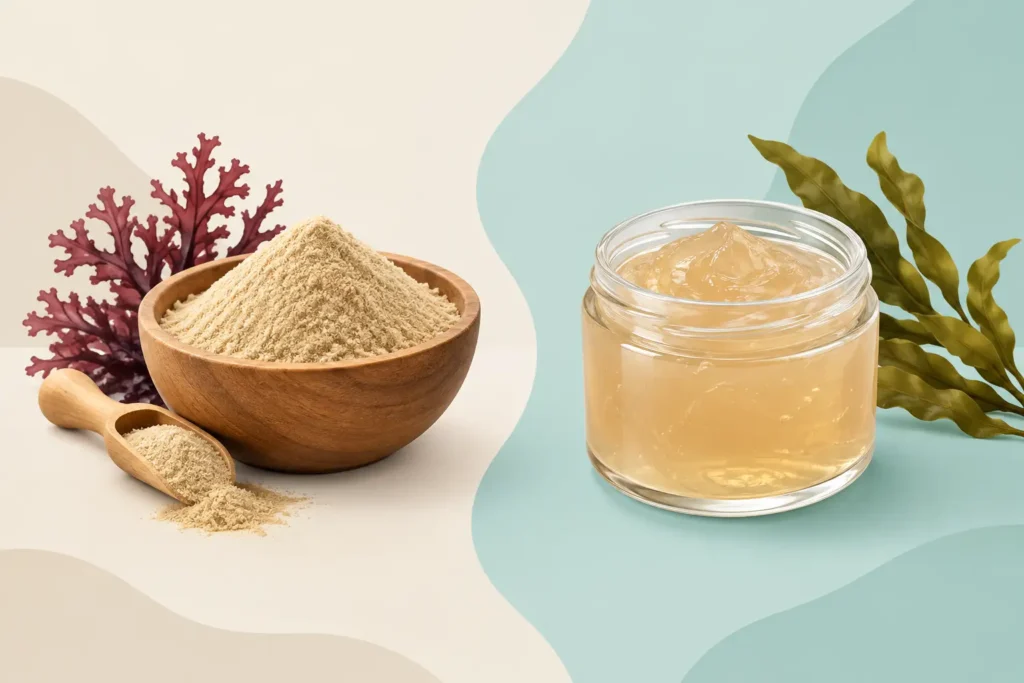
A jar of sea moss gel in the refrigerator and a pouch of powder in the pantry can come from the same intention: making a traditional island ingredient easier to welcome into everyday life. But when it comes to sea moss powder vs gel, the better choice is not always the one with the longest list of benefits. It is the format you will genuinely enjoy using, consistently and comfortably, in your own routine.
For some households, that means a spoonful of gel stirred into a morning smoothie. For others, it means a shelf-stable powder that can travel to the office, blend into a shake, or wait patiently in the cabinet until the next recipe day. Both formats can have a place in a thoughtful wellness practice. The difference is in preparation, texture, flavor, storage, and the kind of ritual you want to create.
Powder vs Gel: The Everyday Difference
Sea moss gel is made by soaking and blending sea moss with water until it reaches a smooth, spoonable consistency. It is familiar to people who enjoy working with whole-food-style ingredients and want a ready-to-use option for drinks, foods, or simple personal-care recipes.
Sea moss powder is dried sea moss that has been ground into a fine format. It offers a more compact, shelf-stable option that is easy to measure and add to recipes. Depending on how it is made, a powder may dissolve quickly or need a little extra blending to feel fully incorporated.
Neither format is automatically better across the board. A gel may feel more natural for someone who wants the experience of a prepared sea moss ingredient. A powder may make more sense for someone with limited refrigerator space, a fast-moving schedule, or a preference for dry pantry staples.
The most useful question is simple: What will make sea moss easiest for you to use without turning your routine into another task?
When Sea Moss Gel Makes Sense
Gel is often the preferred choice for people who want sea moss to feel like part of a fresh kitchen ritual. It is ready to scoop, easy to portion, and especially convenient when your routine already includes smoothies, warm teas, soups, sauces, or homemade treats.
The texture is one of gel’s defining features. A well-prepared gel can blend into foods without adding a gritty feel, particularly when mixed into a high-speed smoothie or a dish with plenty of body. Many people appreciate that it can be stirred into a recipe with minimal measuring and no need to rehydrate anything first.
Gel can also be a welcoming place to start if you are curious about sea moss but do not want to learn a new preparation process. Open the jar, use the recommended serving amount, and return it to the refrigerator. That straightforward rhythm can make consistency feel more attainable.
There are trade-offs. Because gel contains water, it needs refrigeration and has a shorter usable life than a dry powder. It is less convenient for travel and requires attention to freshness. If your refrigerator is already full or you tend to use wellness ingredients only occasionally, you may find yourself preferring a format that keeps longer in the pantry.
Gel is often best for people who enjoy food rituals and expect to use sea moss several times a week. Think of it as a fresh ingredient rather than a long-term cupboard staple.
Ways to Use Gel in Your Kitchen
A spoonful of gel can be blended into a fruit smoothie, stirred into oatmeal after cooking, or mixed into a warm cup of herbal tea. It can also work in soups, dressings, and homemade fruit-forward snacks when blended thoroughly.
If you enjoy making your own body care, gel may also be used in simple, short-term recipes such as a fresh face mask. Keep these creations clean, make small batches, and store them appropriately. Natural ingredients are not automatically preserved ingredients.
When Sea Moss Powder May Be the Better Fit
Powder earns its place through flexibility. It is compact, portable, and easy to keep on hand, which can be especially helpful for busy mornings, work travel, or homes where refrigerator space is limited. For people who already use protein powders, greens powders, or pantry-based smoothie ingredients, it may slide naturally into an existing habit.
A powder is also useful when you want more control over texture and concentration in a recipe. Start with a small amount, blend well, and adjust according to the directions and your preference. In thicker smoothies, blended beverages, and baked recipes, it can be a convenient addition without the extra moisture that gel brings.
Storage is another clear advantage. A properly stored dry powder generally offers greater convenience than a prepared gel, though you should always follow the package instructions for freshness and handling. Keep it tightly sealed, away from heat and moisture, and use a dry utensil each time.
The trade-off is that powder can require more attention when mixing. Some powders blend more smoothly than others, and adding too much at once may affect the taste or texture of a drink. A blender can help, while hand-stirring may be enough for recipes with a thicker base.
Powder is often best for people who want an easy pantry option, travel frequently, or prefer to build sea moss into a shake or recipe rather than take it by the spoonful.
What About Taste and Texture?
Sea moss has an earthy, ocean-grown character that can vary with the source, preparation, and surrounding ingredients. Gel tends to offer a softer, more neutral experience once blended into a flavorful recipe. Powder may be slightly more noticeable if stirred into plain water or lightly flavored foods.
This does not mean one tastes better. It means your recipe matters. Tropical fruit, citrus, ginger, cinnamon, cocoa, berries, and creamy smoothie bases can all create a more balanced experience. If you are new to sea moss, begin with a recipe you already love rather than testing it in a plain drink.
Texture is personal, too. If you value a smooth, ready-made consistency, gel may feel more intuitive. If you are comfortable blending powders into your daily shake, powder may feel equally simple. The best format is the one that disappears into your life in a way you enjoy.
Sourcing Matters More Than the Format
The powder-versus-gel decision is helpful, but it should not distract from the bigger question: Where did the sea moss come from, and how was it handled? A beautiful label does not tell the whole story.
Look for brands that speak clearly about origin, harvesting practices, purity, and quality standards. Wildcrafted sea moss from St. Lucia carries a meaningful connection to island traditions and local waters, but responsible sourcing also means respecting the communities and ecosystems involved. Transparency should feel specific, not vague.
Ask whether the company identifies its sourcing region, works with trusted local partners, and shares how it approaches testing and product quality. These details help you choose with more confidence, whether you prefer a jar of gel or a pouch of powder.
At Ahai Life, that connection from St. Lucia to your home is central to the experience. Sea moss is more than a passing wellness trend when its origins, traditions, and preparation are treated with care.
A Simple Way to Choose
Choose gel if you want a refrigerated, ready-to-use ingredient for smoothies, meals, and fresh recipes. Choose powder if you want portability, longer pantry storage, and an easy addition to shakes or dry recipes.
If you are still undecided, think about the next seven days. Will you be making smoothies at home most mornings? Gel may be your natural match. Will you be commuting, traveling, or reaching for a quick blend after work? Powder may better support that pace.
You do not need a complicated protocol to make sea moss part of your routine. Begin with a format that feels practical, use it in foods you already enjoy, and let your ritual grow at a pace that feels nourishing. Everyday wellness is often built from the small choices that are easy to return to.